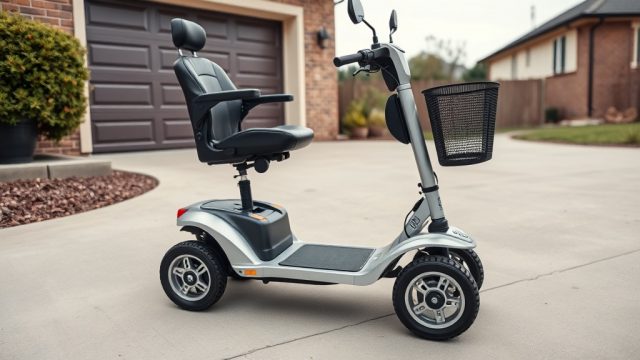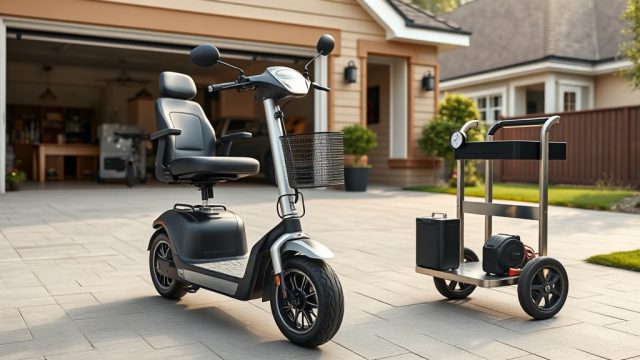
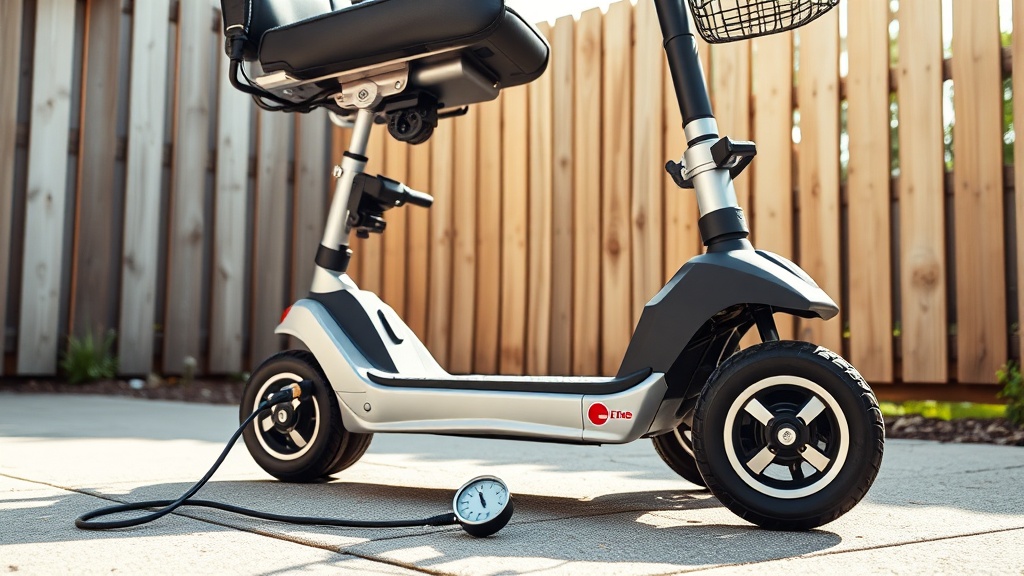
Why Does the Drive Scout Compact Need Battery and Tire Care?
The Drive Medical Scout Compact Travel Scooter is a favorite among mobility scooter users for its lightweight frame and easy disassembly, but like any power-assisted device, its longevity hinges on preventive maintenance. Without proper battery and tire care, riders risk reduced range and unexpected flats. This guide delivers hands-on advice for keeping the Scout Compact rolling reliably, whether navigating a supermarket aisle or a suburban sidewalk.
Battery and tire maintenance are often overlooked until a problem arises, especially when owners focus solely on portability. For a deeper comparison of how the Scout Compact stacks up against a rival in the same category, read our Drive Scout Compact vs Pride Go-Go Elite Traveller Plus: Portability Showdown. That article highlights weight differences but also touches on battery retention—critical for anyone choosing between models.
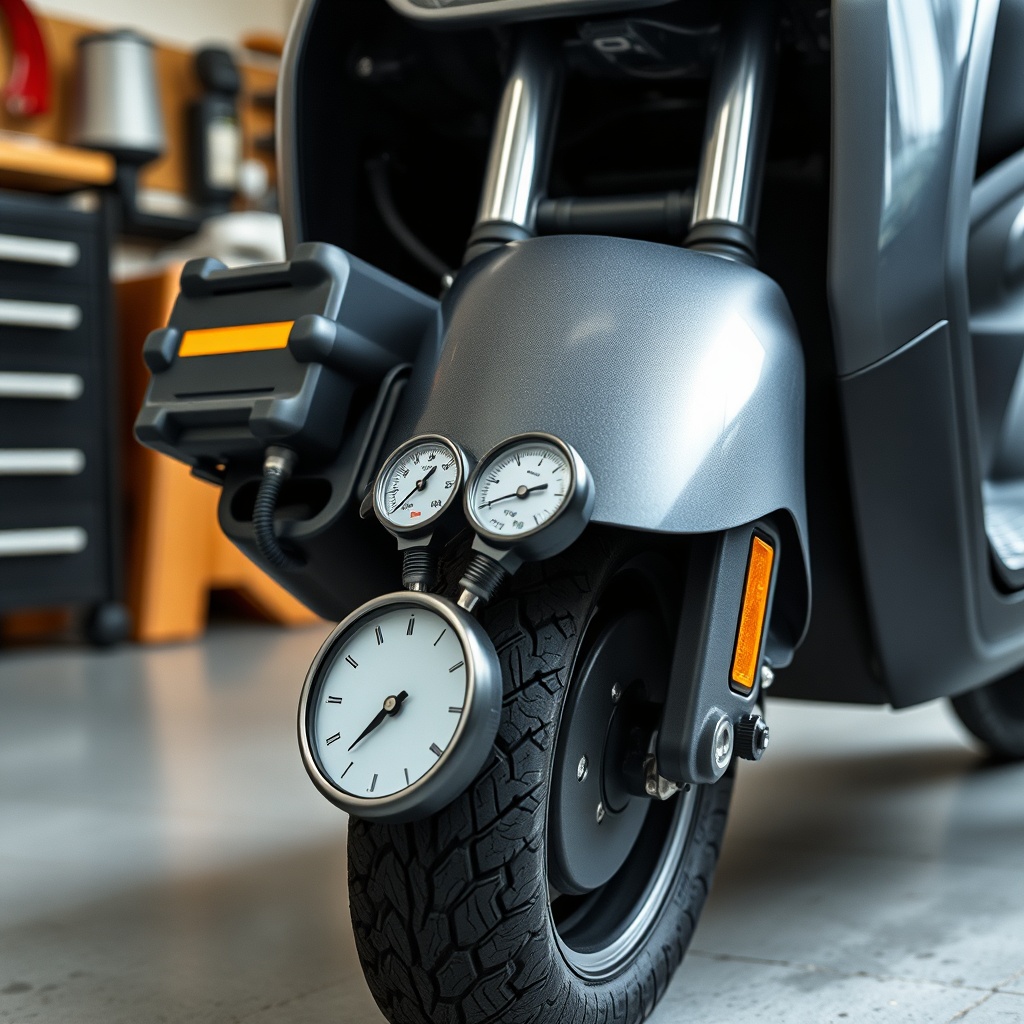
How Often Should I Charge the Scout Compact Battery to Maximize Life?
The Drive Scout Compact uses a sealed lead-acid (SLA) battery pack, typically a 20Ah or 18Ah unit, depending on the configuration. To maximize calendar life—usually 300 to 500 charge cycles—charge the battery after every use, even if only for a short trip. Deep discharging, where the battery drops below 20% capacity, accelerates sulfation and reduces overall range. A good rule: recharge as soon as the battery gauge shows one bar remaining.
Charging frequency also depends on temperature. In colder weather (below 10°C or 50°F), SLA batteries lose about 20% of their effective capacity, so more frequent top-ups are needed. In summer, avoid charging immediately after a long ride; let the battery cool for 30 minutes to prevent heat stress. Always use the supplied 2A charger—third-party fast chargers can overheat and damage the battery management system.
For real-world range data, check our Drive Scout Compact Battery Range: Real-World Test, which measured 12 km (7.5 miles) on a full charge with a 90 kg (198 lb) rider on mixed terrain. That test also highlighted how even a 0.5 psi tire pressure loss reduced range by 8%.
What Are the Warning Signs of a Failing Battery on the Scout Compact?
Catching battery degradation early saves money and prevents stranding. Look for three key symptoms:
- Reduced range by 30% or more: If a full charge now covers only 6 km (3.7 miles) instead of the usual 10-12 km, the battery likely has a dead cell.
- Slow speed on inclines: The Scout Compact’s 4-pole motor draws more current on hills; a weak battery can’t supply it, leading to uphill speeds below 3 mph (4.8 km/h).
- Swollen battery casing: A bulging pack indicates internal gas buildup from overcharging or heat damage—replace immediately to avoid rupture.
Perform a monthly voltage check with a multimeter: a fully charged SLA pack should read 12.8-13.0V per battery (two in series for 24V system). Below 12.4V after 8 hours of charging suggests replacement is due. Replacement packs cost around £140-£160 (€160-€185 or $180-$205 USD) from UK and EU mobility dealers.
How Do I Check Tire Pressure and Tread Depth Correctly?
The Scout Compact rolls on two 10-inch (254 mm) front solid tires and two 10-inch rear pneumatic (air-filled) tires. Solid front tires never need air, but the rear pneumatics require regular monitoring. Recommended tire pressure is 35-40 psi (2.4-2.8 bar) for most users. Underinflated tires increase rolling resistance, draining the battery faster—by up to 15% per 5 psi drop.
To check pressure, use a digital tire gauge with a 0-60 psi range. Unscrew the valve cap, press the gauge firmly, and read the value. Tread depth should be a minimum of 1.6 mm (1/16 inch) across the tire’s center; below that, replace the tires. Uneven wear—more on the left than right—suggests a misaligned wheel or bent fork.
| Issue | Severity Level | Action Required | Cost (GBP/EUR/USD) |
|---|---|---|---|
| Pressure 5-10 psi under spec | Low | Inflate to 35-40 psi | £0 (free) |
| Tread depth below 1.6 mm | Medium | Replace tires | £25-£35 each (€30-€40 / $32-$45) |
| Sidewall crack or bulge | High | Immediate replacement | £25-£35 each |
| Uneven wear (one tire only) | Medium | Check fork alignment and balance | £15-£20 (€18-€24 / $20-$26) |
| Flat tire from puncture | High | Patch or replace inner tube (not solid tire) | £8-£12 for tube (€10-€14 / $10-$15) |
Always use a torque wrench when removing or installing tires—20 Nm (14.7 ft-lb) for the lug nuts—to avoid stripping the aluminum wheel hubs.
Can I Replace the Scout Compact’s Solid Front Tires with Pneumatics?
This is a common question among owners who want a smoother ride on rough pavement. The answer is no—the front wheels are designed with solid rubber molded into the hub, and replacement with pneumatic tires would require different rims, tires, and possibly a fork modification. Solid tires offer zero-maintenance running: no punctures, no air checking, and no tread wear for thousands of miles. However, they transmit more road vibration to the frame and rider.
If ride comfort is a priority, consider adding a cushioned seat pad (£20-£30) or adjusting the rear tire pressure to the lower end of the range (32 psi) for a slightly softer feel. Pneumatic rear tires already absorb most bumps; the solid fronts handle side-load during turns. Mixing tire types is standard on many travel scooters, and the Scout Compact’s setup is proven over years of use.
What Owners Say
Owners on UK and EU forums frequently praise the Scout Compact for its reliable battery life when maintained properly. “I’ve had mine for three years and changed the battery only once—after I left it uncharged for a month,” reports one user on a UK mobility site. Another owner notes, “The tires are the weak point if you neglect them. I got a flat on a gravel path because I didn’t check pressure for six months. Now I set a monthly reminder.”
Several owners mention that the battery charge indicator on the tiller is not precise—it shows full for the first half of the range and drops quickly after. This underscores the value of range testing. “After reading the real-world test, I started charging after every trip, and the battery lasted two years longer than my old scooter’s,” says a third owner. The consensus: proactive care with charging and tire pressure doubles the usable life of the Scout Compact.
Frequently Asked Questions
Q: How long does the Drive Scout Compact battery last between charges on flat ground?
A: Typically 10-12 km (6.2-7.5 miles) with a 90 kg rider on flat pavement, assuming 35 psi rear tires and full charge. Heavy use on hills or with underinflated tires reduces range to 7-8 km.
Q: Can I use a lithium battery upgrade for the Scout Compact?
A: Not directly—the battery tray is sized for SLA packs. Aftermarket lithium conversions exist but require modifying the charging port and BMS. Cost is £400-£500 (€460-€580 / $510-$640), and warranty may void.
Q: What tools do I need for tire replacement on the Scout Compact?
A: You’ll need a 10 mm socket wrench, tire levers (plastic preferred), a torque wrench, and a new 10-inch inner tube. Solid front tires require no tools—they never need replacement.
Q: How do I store the Scout Compact for winter to protect the battery?
A: Fully charge the battery, then store in a cool, dry place (5-15°C, 41-59°F). Recharge every 6 weeks to prevent sulfation. Avoid freezing temperatures below -10°C (14°F) which can crack the casing.
Q: My Scout Compact won’t charge—what’s the first thing I should check?
A: Inspect the charger fuse (2A, 250V, glass type) and the battery connector pins for corrosion. A multimeter test on the charger output should show 24V. If both are fine, the battery may be completely dead—test it with a load tester.
Q: Are the tires on the Drive Scout Compact tubeless or tubed?
A: The rear pneumatic tires use a standard inner tube (2.50-10 size). The front solid tires are tubeless by design. Always replace the inner tube when the tire is removed to ensure a seal.