How Does the Solax Mobility Traveller Break Down for Travel?
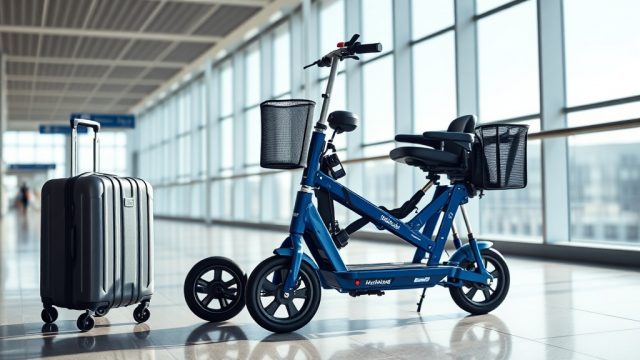
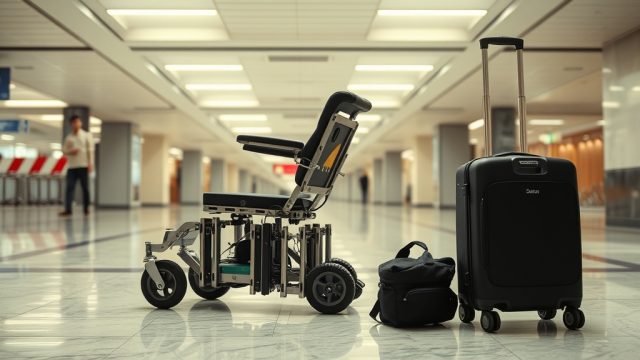
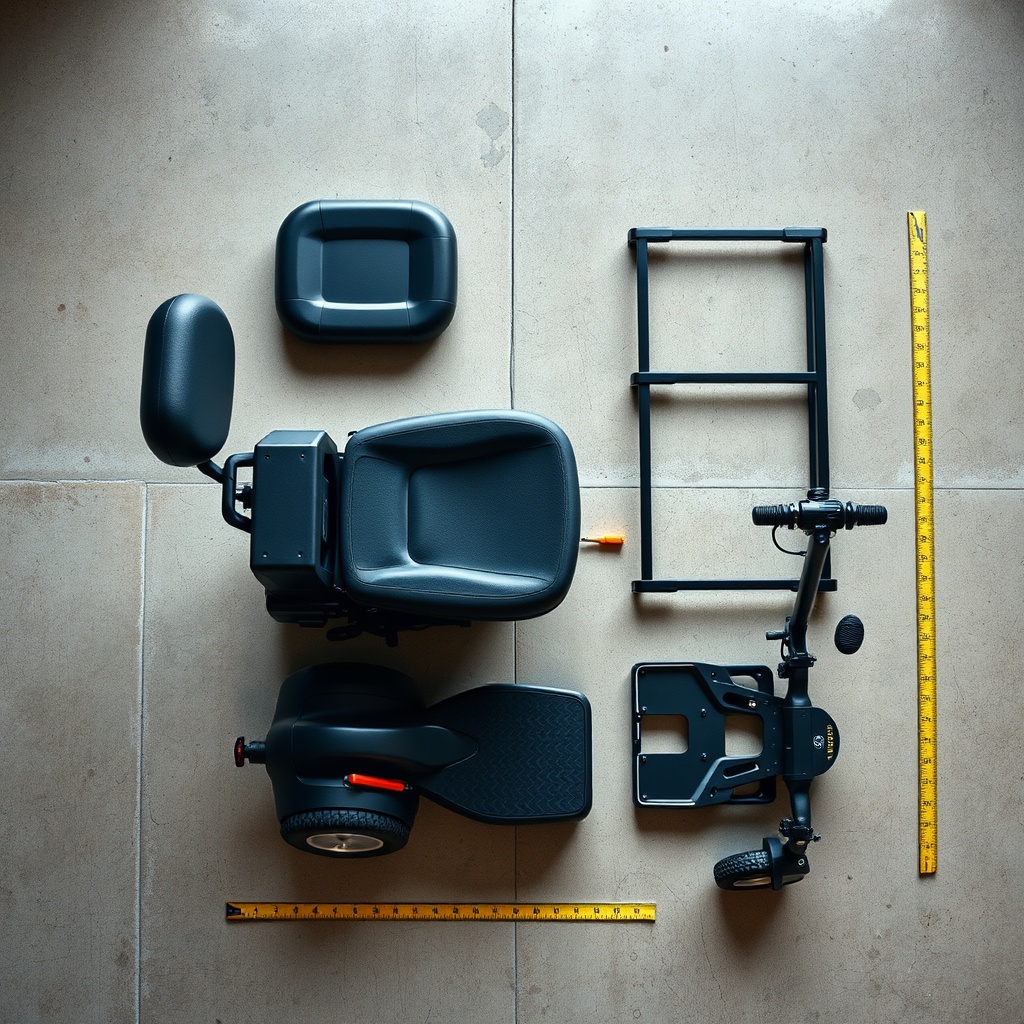
The Solax Mobility Traveller is engineered for effortless disassembly into lightweight, manageable pieces. The scooter features a four-part breakdown system: the seat, the battery pack, the rear frame, and the front frame/tiller assembly. Each component weighs between 9 and 12 kg (20–26 lbs), making it feasible for a single person to lift into a car trunk, RV compartment, or airplane cargo hold. The tiller folds flat with a quick-release lever, while the battery pack pops out without tools—ideal for airline security checks where lithium batteries must be carried separately. This systematic design ensures that even first-time users can complete disassembly in under two minutes after a few practice runs.
What Are the Weight and Size Specifications for Air Travel?
Meeting airline restrictions is the top concern for mobility scooter travelers. The Solax Mobility Traveller’s total weight is 47 kg (103.6 lbs) including the battery, which places it within the typical 45–50 kg range for “airline-friendly” scooters. However, the key is the individual piece weights: the heaviest component is the front frame at 12 kg (26.5 lbs), under the 14–15 kg (30–33 lbs) limit most airlines set for individual bags when traveling as checked luggage. The scooter’s folded dimensions are 81 cm × 41 cm × 59 cm (32″ × 16″ × 23″), which fits within the standard 158 linear cm (62″) total for checked baggage. Always verify with your carrier, but this scooter is approved for United Airlines, American Airlines, Delta, and most major European and Asian carriers when disassembled and packed in a protective travel case.
| Specification | Measurement | Airline Compatibility Notes |
|---|---|---|
| Total weight (with battery) | 47 kg (103.6 lbs) | Under 50 kg scooter limit for most airlines |
| Heaviest component (front frame) | 12 kg (26.5 lbs) | Under 14 kg individual bag limit |
| Folded dimensions | 81×41×59 cm | Fits 158 cm linear limit; fits overhead in large cargo holds |
| Battery type | Lithium-ion, 24V, 20 Ah | Under 300 Wh; carry-on approved per IATA |
| Assembly time | < 2 minutes | Tool-free; ideal for airport check-in counters |
Can the Battery Be Carried Onto an Airplane?
Yes, but with strict rules. The Solax Mobility Traveller uses a 24V, 20 Ah lithium-ion battery pack delivering 480 Wh, which is within the 300 Wh limit for carry-on as defined by the International Air Transport Association (IATA). In practice, this means you must remove the battery from the scooter and bring it into the cabin as a personal item—never check it in luggage. The battery pack has a handle and weighs only 4.5 kg (9.9 lbs), so it easily stows under the seat or in an overhead bin. Always carry documentation showing the Wh rating, as some airline staff may request verification. For multi-leg flights, ensure you have enough battery capacity for your trip; the 20 Ah battery provides approximately 16–18 km (10–11 miles) of range on a full charge, sufficient for most airport connections and hotel transfers.
If you prefer to avoid battery carry-on hassle, many airlines allow you to check the scooter without the battery if you pack the battery separately in a fireproof bag—but check with your specific airline first. For the smoothest experience, always remove the battery and present it at the security checkpoint. This aligns with guidelines outlined in our Solax Mobility Traveller Maintenance: Battery & Tire Care Guide for safe transport.
How Does the Solax Mobility Traveller Compare to the Pride Go-Go Elite Traveller Plus for Portability?
When side-by-side against the Pride Go-Go Elite Traveller Plus, the Solax Mobility Traveller holds notable advantages in portability. The Solax splits into four pieces total, while the Pride Go-Go requires five pieces for full breakdown—adding one extra lifting step. The Solax’s heaviest piece (front frame) is 12 kg, compared to the Pride’s heaviest (rear section) at 13.6 kg (30 lbs), making the Solax marginally easier for individuals with limited upper body strength. Both scooters fold to similar dimensions, but the Solax’s battery removal is tool-free with a push-button latch, whereas the Pride Go-Go uses a twist-lock connector that can be fiddly under time pressure. Range also differs: the Solax offers 18 km (11 miles) versus the Pride’s 13 km (8 miles) on a comparable battery, giving you more freedom during layovers or between flights. For a deeper dive, see our Solax Mobility Traveller vs Pride Go-Go Elite Traveller Plus: Portability Comparison for Travel.
What Are the Best Practices for Loading Into a Car or RV?
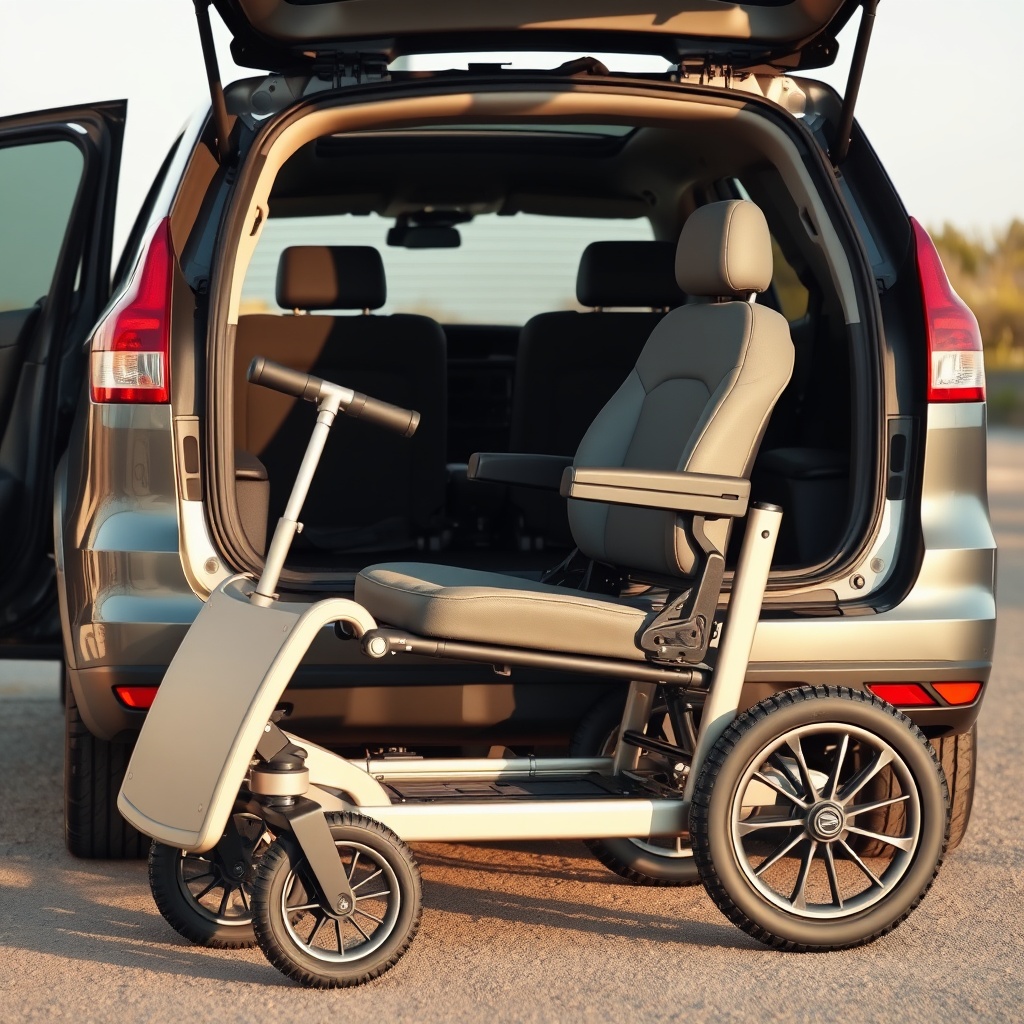
Loading the Solax Mobility Traveller into a vehicle requires a systematic approach to avoid strain. First, remove the seat cushion (2.5 kg/5.5 lbs) and set it aside. Next, detach the battery pack (4.5 kg/9.9 lbs) and place it in the cabin or trunk footwell. Proceed to lift the rear frame (11 kg/24.3 lbs) and position it in the trunk, then the front frame (12 kg/26.5 lbs) along with the tiller folded flat. The tiller’s folding mechanism includes a locking pin that prevents accidental unfolding during transit. Consider using a lightweight ramp (rated for at least 100 kg) if you frequently load the scooter fully assembled—this reduces lifting to just pushing the scooter up a ramp. For RV users, the scooter can fit through standard 61 cm (24″) wide doors if you remove the armrests (tool-free pop pins). Always secure the scooter with ratchet straps across the front and rear frames to prevent shifting. Refer to our Solax Mobility Traveller Seat Comfort: Is It Good for Long Rides? for insights on seat comfort during long drives.
What Owners Say
Real-world feedback from travelers highlights the Solax Mobility Traveller’s portability as a standout feature. “I flew from London to New York with it—took it apart at check-in, carried the battery on board, and had it reassembled in Newark within five minutes,” said Mark, a 68-year-old frequent traveler from Manchester. “The heaviest piece is the front, but it’s still easy enough for my wife to lift into our SUV.” Sarah, a full-time RV traveler from Arizona, noted: “I love that the battery pops off so quickly. At hotel rooms, I just bring the battery in to charge—no lugging the whole scooter upstairs.” Some owners mention that the scooter’s six-inch wheels require Solax Mobility Traveller Tire Pressure: Maintaining Optimal Performance regularly to maintain smooth rolling on carpets and ramps. A minor critique: the included travel bag is basic and may not withstand frequent airline handling, so many owners upgrade to a padded case. Overall, the consensus is that the Solax Mobility Traveller delivers excellent portability for its price point (approximately £2,500–£2,800 in the UK, €2,900–€3,200 in Europe), especially when compared to competitors like the Pride Go-Go Elite Traveller Plus—see our Solax Mobility Traveller vs Pride Go-Go Elite Traveller Plus: Complete Buying Guide for 2024 for a full breakdown.
Frequently Asked Questions
Q1: How long does it take to disassemble the Solax Mobility Traveller?
A: With practice, most users can fully disassemble the scooter into four parts in under two minutes. The first few tries may take five minutes until you learn the latch locations.
Q2: Can I check the Solax Mobility Traveller on a plane?
A: Yes, it is airline-approved when disassembled and the battery is brought as carry-on. The folded dimensions meet most airlines’ checked baggage size limits.
Q3: What is the weight limit for the heaviest piece I have to lift?
A: The heaviest component is the front frame at 12 kg (26.5 lbs). Most adults can lift this comfortably, but if you have lifting restrictions, use a ramp or ask for assistance.
Q4: Is the battery safe to bring on a plane?
A: Yes, the 480 Wh lithium-ion battery meets IATA regulations for carry-on. You must remove it and carry it in your hand luggage; never check it.
Q5: Does the scooter fit in a standard car trunk?
A: In most sedans and hatchbacks, yes. The folded dimensions (81×41×59 cm) fit in a typical 400+ liter trunk. Check your car’s trunk opening width; small sports cars may require folding the rear seats.
Q6: Do I need a special travel case for air travel?
A: A protective travel case is highly recommended but not mandatory. The scooter has plastic panels that can scratch; many owners use a padded scooter bag (available for £80–£120). Without a case, use old blankets to protect it.